1981, central Amazon: a young stand begins to grow. The Ecosystem Demography (ED) model, used in NASA's Carbon Monitoring System and the Global Carbon Budget, simulates its growth, mortality and reproduction from monthly climate, CO₂ and soil.
Year1981
Canopy height3.8 m
Aboveground biomass0.1 kgC m⁻²
Leaf area index0.6
ED reference simulation · 3.25°S, 63.75°W
↺ Back to 1981, now with every starting age
02 Fifteen starting ages
Every site is seeded with fifteen forest ages.
From 1-year saplings to 500-year-old stands, each grown in the same climate. Young forests race upward while old ones hold their carbon. An emulator has to learn both.
Year1981
Canopy height by starting age (years) · same site
03 The planet
54,152 forests. One planet.
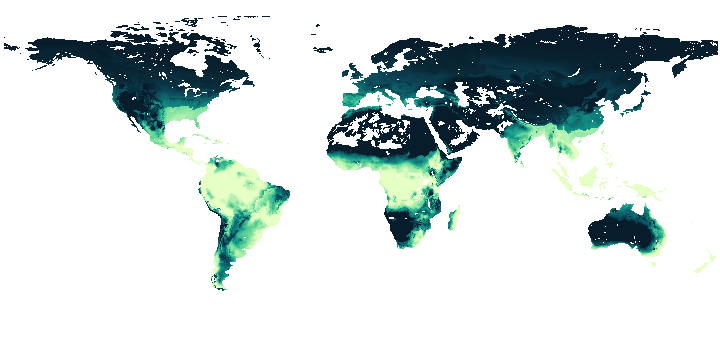
Repeated at every 0.5° land cell, across tropical, arid, temperate, cold and polar climates. Generating it took ED about 812 CPU-days on an HPC cluster.
TropicalAridTemperateColdPolar
Year1981
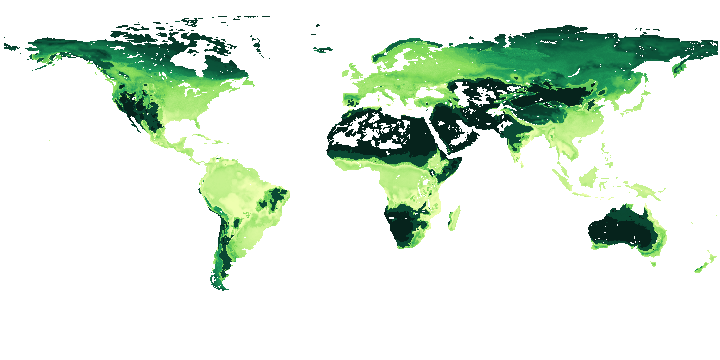
Canopy height035 m
04 The emulator
Now teach a network the simulator.
Every step is a training pair: 136 monthly drivers plus the current forest state in, next year's forest out. CarbonGlobe delivers it ML-ready, with tensors, splits, metrics and eight baselines.
Inputs136 drivers × 12 months + forest state · year tDeep emulatorLSTM · Transformer · DeepED …Outputsforest state · year t + 1 height · AGB · soil C · LAI · GPP · NPP · Rh
05 What if?
Forty years ahead, in about an hour.
Rolled out year after year, an emulator answers what-if questions: a different climate, a different starting forest. A global run that took ED 40 days of wall time takes about one GPU-hour.
ClimatesStarting forestsFuture forcing
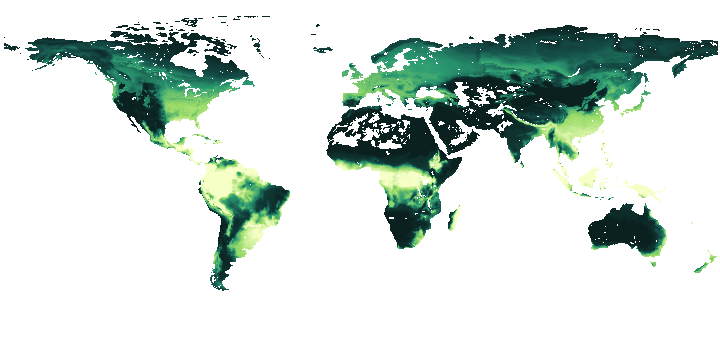
Aboveground biomass (kgC m⁻²) of ED reference rollouts from a 1-year-old forest, 1981–2021.
AI weather models such as FourCastNet and GraphCast took off because open, ML-ready benchmarks existed. Forest carbon had nothing comparable. The best process-based model, ED, needs more than 100 inputs from many sensing products and about six weeks of cluster time for one global run.
CarbonGlobe closes that gap. We integrate the inputs, run and calibrate ED globally, and package the result for machine learning: inputs, targets, splits, scenarios and metrics, plus a suite of baseline emulators.
Atmosphere
Reanalysis ERA5
Benchmark WeatherBench
AI emulators FourCastNet · GraphCast
Land & forests
Process model Ecosystem Demography
Benchmark CarbonGlobe
AI emulators DeepED · Transformers · yours
Read the abstract
Forest ecosystems play a critical role in the Earth system as major carbon sinks that are essential for carbon neutralization and climate change mitigation. However, the Earth has undergone significant deforestation and forest degradation, and the remaining forested areas are also facing increasing pressures from socioeconomic factors and climate change, potentially pushing them towards tipping points. Responding to the grand challenge, a theory-based Ecosystem Demography (ED) model has been continuously developed over the past two decades and serves as a key component in major initiatives, including the Global Carbon Budget, NASA Carbon Monitoring System, and US Greenhouse Gas Center. Despite its growing importance in combating climate change and shaping carbon policies, ED's expensive computation significantly limits its ability to estimate carbon dynamics at the global scale with high spatial resolution. Recently, machine learning (ML) models have shown promising potential in approximating theory-based models with interesting success in various domains including weather forecasting, thanks to the open-source benchmark datasets made available. However, there are currently no publicly available ML-ready datasets for global carbon dynamics forecasting in forest ecosystems. The limited data availability hinders the development of corresponding ML emulators. Furthermore, the inputs needed for running ED are highly complex with over a hundred variables from various remote sensing products. To bridge the gap, we develop a new ML-ready benchmark dataset, CarbonGlobe, for carbon dynamics forecasting, featuring that: (1) the data has a global-scale coverage at 0.5° resolution; (2) the temporal range spans 40 years; (3) the inputs integrate extensive multi-source data from different sensing products, with calibrated outputs from ED; (4) the data is formatted in ML-ready forms and split into different evaluation scenarios based on climate conditions, etc.; (5) a set of problem-driven metrics is designed to develop benchmarks using various ML models to best align with the needs of downstream applications.
The dataset
From satellites and reanalysis to ML-ready tensors.
Three stages, done jointly by carbon scientists and ML researchers, so you can start training on day one.
1Integrate 100+ inputs
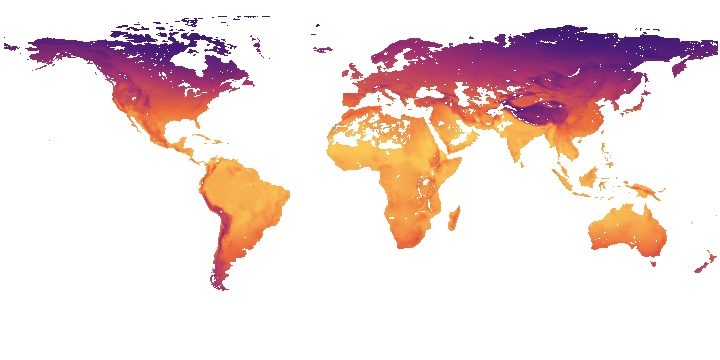
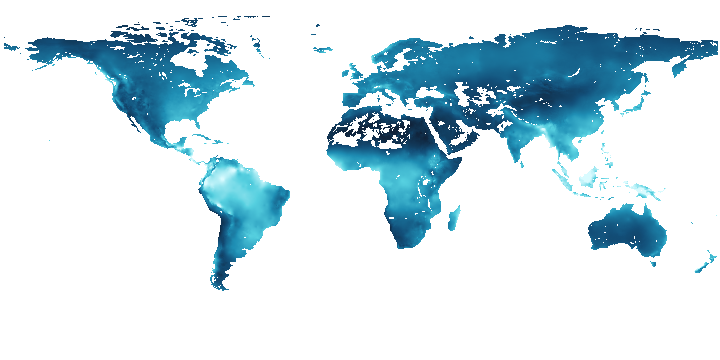
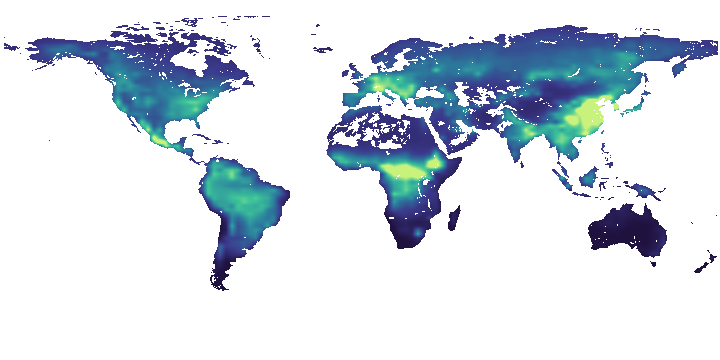
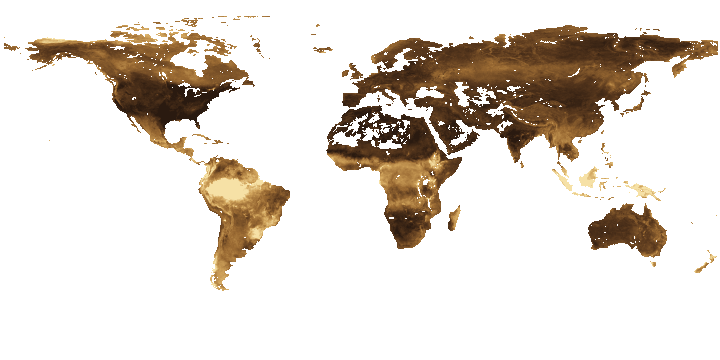
Air temperature · MERRA-2Precipitation · MERRA-2CO₂ · NOAA CarbonTrackerSoil hydraulics · ROSETTA
Monthly meteorology (incl. 24-hour profiles), surface CO₂, soil properties and disturbance: 136 features per month at 0.5°.
2Simulate with ED
Ecosystem Demography v3.0
Calibrated against LiDAR, flux towers, forest inventories and atmospheric inversions
~812 CPU-days on AMD EPYC nodes, for 15 seed ages at every site.
3Package 7 targets
Canopy heightAboveground biomassSoil carbonGross primary production
Height, AGB, soil C, LAI, GPP, NPP and Rh for every site, year and seed age.
Task: given X and v₀, forecast Y step by step for all 40 years.
Scenario 1
Sparse to dense
Train on 1/16 of sites (roughly a 4× coarser grid) and predict the rest, just as an emulator would fill in a finer grid.
Scenario 2
Across climates
Scores split by Köppen–Geiger zone: tropical, arid, temperate, cold and polar. Where does an emulator break?
Scenario 3
Across forest ages
Fifteen seed ages from 1 to 500 years test young, fast-growing stands and old, carbon-dense ones.
Problem-driven metrics
Beyond RMSE.
Averaging errors over 40 years hides what matters downstream. Next to RMSE and MAE, CarbonGlobe scores delta error, the error in year-over-year change, and cumulative error, how far a forecast has drifted by year 40.
Explore
Spin the planet. Scrub forty years.
Real CarbonGlobe targets on every 0.5° land cell. Pick a variable and a starting forest age, press play, and click anywhere on land to see that site's trajectory.
Loading 41 global grids…
Canopy height035
Drag to rotate · scroll to zoom · click land
Variable
Starting forest age
Year 2021
Central Amazon3.25°S, 63.75°W · tropical
—
ED reference simulations at 0.5°. Stocks show the December state; LAI and fluxes are annual means. Values are quantized for the browser; download the dataset for full precision.
Benchmarks
Eight emulators. No single winner.
The ED-specific DeepED leads on slowly accumulating stocks; attention models lead on seasonal fluxes. That gap is the open research problem.
Lower is better · click a column to compare models
Height · RMSE (m)
Overall evaluation with noise-perturbation training, Table 1 of the paper. Colors rank the eight models within each variable.
Speed
≈1,000× faster than the simulator.
A 40-year global forecast took ED 40.6 days of wall time on 20 CPU cores. Most emulators finish in about an hour on a single RTX A4500.
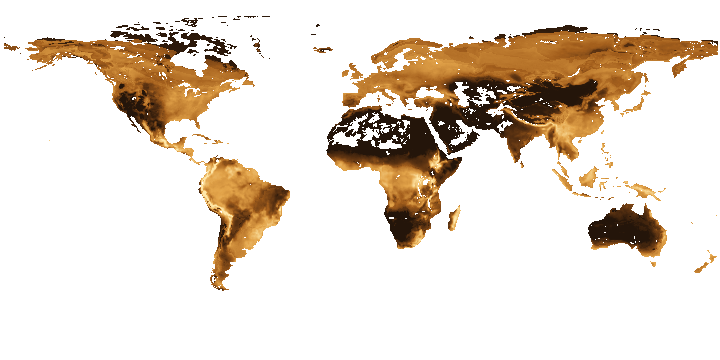
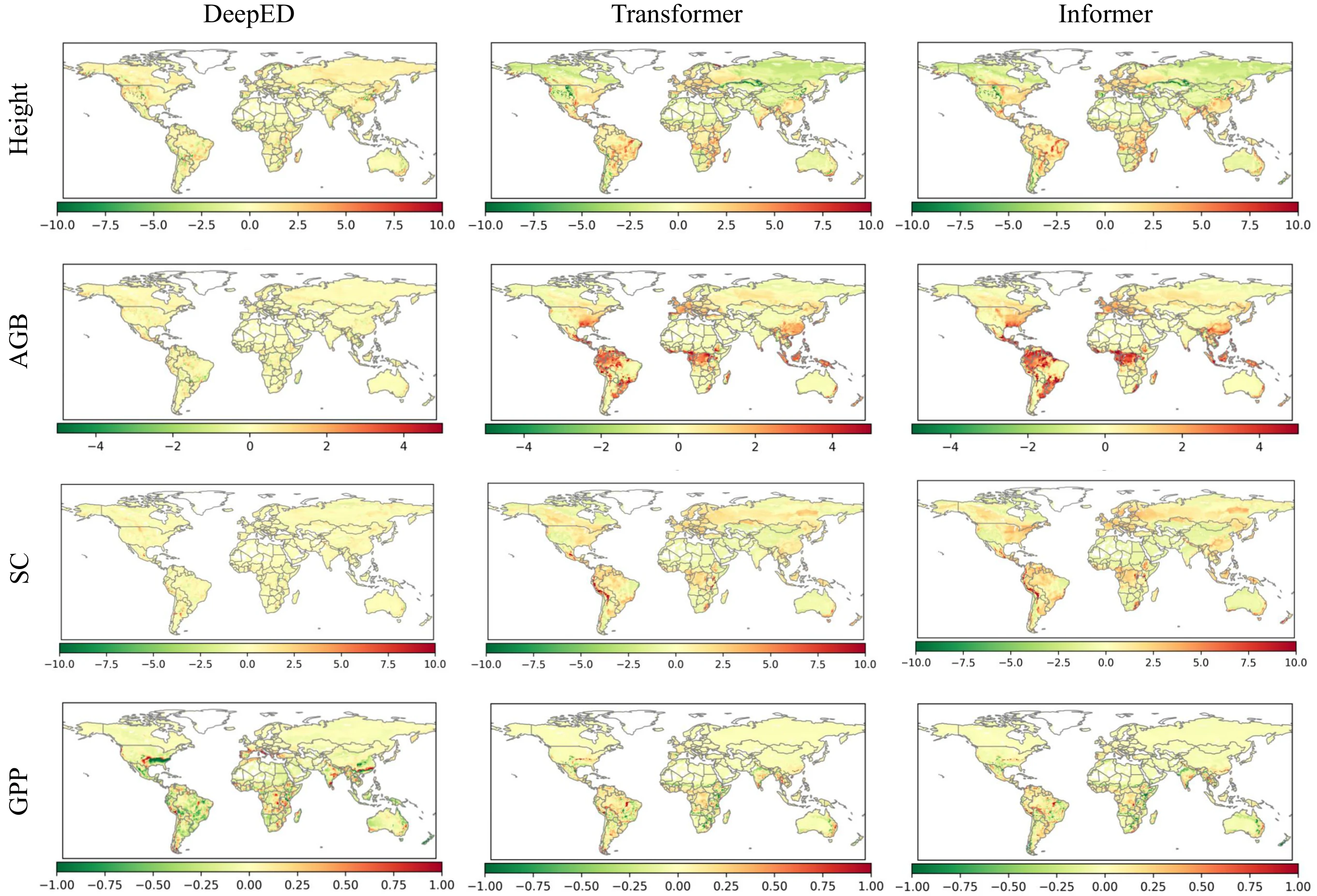
Where emulators drift: year-40 difference between emulator and ED for the three strongest models. DeepED overestimates in sparse, cold forests; attention models overshoot in dense tropical and eastern U.S. forests.
Impact
The missing land layer for AI Earth-system models.
Weather and climate models already have fast AI counterparts. CarbonGlobe trains the land carbon component that can plug in next to them.
Couple
Plug into climate models
A fast, differentiable land carbon module that can sit inside AI or hybrid Earth-system models.
Scale
Finer than ED can afford
A 0.1° run would cost ED ~25× more. Emulators trained on coarse grids can fill in finer ones.
Explore
Scenarios in hours
Sweep climate pathways, disturbance and reforestation plans fast enough for interactive what-if analysis.
Monitor
Digital twins of the sink
ED already informs the Global Carbon Budget, NASA CMS and Maryland's carbon inventory. Emulators make it continuous.
@inproceedings{NEURIPS2025_0b82662b,
 author = {Wang, Zhihao and Ma, Lei and Hurtt, George and Jia, Xiaowei and Li, Yanhua and Li, Ruohan and Li, Zhili and Xu, Shuo and Xie, Yiqun},
 booktitle = {Advances in Neural Information Processing Systems},
 doi = {10.52202/085713-0261},
 editor = {D. Belgrave and C. Zhang and H. Lin and R. Pascanu and P. Koniusz and M. Ghassemi and N. Chen},
 publisher = {Curran Associates, Inc.},
 title = {CarbonGlobe: A Global-Scale, Multi-Decade Dataset and Benchmark for Carbon Forecasting in Forest Ecosystems},
 url = {https://proceedings.neurips.cc/paper_files/paper/2025/file/0b82662b6c32e887bb252a74d8cb2d5e-Paper-Datasets_and_Benchmarks_Track.pdf},
 volume = {38, Main Conference},
 year = {2025}
}